
Analytical challenges vary widely across application areas such as life sciences, food and agriculture, environmental analysis, and industrial process monitoring. Each application comes with its own requirements in terms of sensitivity, speed, robustness, and cost efficiency—as well as the need for reliable detection and precise quantification.
A broad portfolio of optical detection methods—tailored to your specific application requirements.
Flexible detection technologies for various applications
At dg technologies, we follow a clear principle: the application defines the detection technology—not the other way around. Instead of focusing on a single method, we support a broad range of optical detection technologies and tailor each solution to your specific needs.
The following overview illustrates how different detection technologies align with typical application areas and analytical requirements.
Matching detection technologies to applications
Different applications require different analytical approaches. There is no single detection technology that fits all use cases. Depending on the required sensitivity, sample type, measurement conditions, and need for quantification, different optical methods offer specific advantages. The overview below shows how typical application areas align with suitable detection technologies.
| Application Area | Typical Use Cases | Suitable Detection Technologies |
|---|---|---|
| Life Sciences & Diagnostics | Immunoassays (e.g. PSA), lateral flow tests, biomarker detection | Fluorescence measurement, luminescence measurement, up-converting phosphor detection |
| Food & Agriculture | Antibiotics in milk, contaminants, composition analysis | Near-infrared spectroscopy, UV/visible spectroscopy, fluorescence measurement |
| Environmental Analysis | Water quality, trace contaminants, organic pollutants | Fluorescence measurement, UV/visible spectroscopy |
| Forensics & Security | Substance identification, document analysis, trace detection | Raman spectroscopy, luminescence measurement |
| Industrial & Process Monitoring | Inline analysis, process control, material consistency | Near-infrared spectroscopy, Raman spectroscopy |
| Materials Research & Quality Control | Polymer analysis, semiconductors, pharmaceuticals | Raman spectroscopy, UV/visible spectroscopy, near-infrared spectroscopy |
Need help selecting the right technology?
Choosing the appropriate detection method depends on multiple factors. We help you identify the best-fit solution for your specific use case.
Our optical detection technologies
Our systems support a range of optical detection technologies, each based on distinct physical principles such as absorption, emission, or scattering of light. The following sections provide a concise overview of these methods and their typical applications.
What is it?
Fluorescence is a form of light emission in which a molecule, after excitation by light, emits light at a longer wavelength within nanoseconds.
How does it work?
A fluorophore is excited with light of a specific wavelength, promoting electrons to a higher energy state. As the electrons return to the ground state, light is emitted at a longer wavelength (Stokes shift). The intensity or spectral distribution of this emitted light is measured and evaluated.
Typical applications
- Biomolecule labeling and detection (e.g. immunoassays, DNA analysis)
- Cell and tissue imaging
- Trace analysis with very high sensitivity
- Environmental analysis (e.g. aromatic hydrocarbons)
Best suited for:
High-sensitivity bioanalytical applications such as immunoassays, diagnostics, and trace detection in life sciences and environmental analysis.

What is it?
A vibrational spectroscopic technique based on the inelastic scattering of light by molecules.
How does it work?
A laser illuminates the sample, and a small fraction of the scattered light undergoes an energy shift due to molecular vibrations. This Raman shift is characteristic of specific chemical bonds and molecular structures, enabling substance identification.
Typical applications
- Substance identification with minimal sample preparation
- Material analysis (polymers, semiconductors, pharmaceuticals)
- Forensic and art analysis
- In-situ process monitoring (Process Analytical Technology)
Best suited for:
Material and substance identification, including polymers, pharmaceuticals, and forensic samples, without the need for sample preparation.

What is it?
A method that measures the absorption of ultraviolet and visible light by a sample.
How does it work?
Molecules absorb light at specific wavelengths, promoting electrons to higher energy levels. The decrease in transmitted light is measured and can be used for quantitative analysis based on established relationships between absorption and concentration.
Typical applications
- Concentration determination in solutions
- Enzyme kinetics and protein quantification
- Quality control in chemistry and pharmaceuticals
- Water and environmental analysis
Best suited for:
Quantitative concentration measurements in liquids, widely used in laboratory analysis, quality control, and environmental testing.
What is it?
Luminescence is the emission of light without thermal excitation and includes chemiluminescence, bioluminescence, and phosphorescence.
How does it work?
Light emission is generated through chemical reactions, biological processes, or delayed photophysical mechanisms. The emitted light intensity is measured over time, often enabling extremely sensitive detection.
Typical applications
- Highly sensitive immunoassays (e.g. HRP/luminol systems)
- Reporter gene assays (e.g. luciferase)
- ATP detection (hygiene monitoring)
- Clinical diagnostics with very low detection limits
Best suited for:
Ultra-sensitive detection in diagnostic assays, including clinical testing, immunoassays, and ATP-based hygiene monitoring.

What is it?
Up-converting phosphor detection uses inorganic particles that absorb multiple low-energy photons and emit a single higher-energy photon in the visible range.
How does it work?
The particles are excited with near-infrared light. Through sequential photon absorption, visible light is emitted (anti-Stokes emission). Because biological samples exhibit minimal background under near-infrared excitation, signal-to-noise ratios are significantly improved.
Typical applications
- Lateral flow assays with very high sensitivity
- Multiplex bioassays
- Point-of-care diagnostics
- Anti-counterfeiting and security applications
Best suited for:
Lateral flow and point-of-care applications requiring high sensitivity and robustness with minimal background interference.

What is it?
A spectroscopic method operating in the near-infrared range that measures absorption related to molecular vibrations, particularly of C–H, O–H, and N–H bonds.
How does it work?
Near-infrared light penetrates deeply into materials and is absorbed at characteristic wavelengths. The resulting spectra are typically broad and are evaluated using mathematical models to enable qualitative and quantitative analysis.
Typical applications
- Rapid, non-destructive material analysis
- Moisture, fat, and protein determination in food and agriculture
- Pharmaceutical blend and tablet analysis
- Process analytics and inline monitoring
- Medical tissue analysis (e.g. oxygenation)
Best suited for:
Non-destructive material and process analysis, including food composition, pharmaceutical quality control, and industrial monitoring.
Application areas
Our detection technologies are used across a wide range of real-world applications. The following examples illustrate how specific analytical challenges are addressed using rapid, quantitative testing. Each application is enabled by selecting the most suitable detection technology based on its requirements.
Life Sciences

Veterinary Diagnostics

Infectious Diseases
Drug Monitoring

Food Testing

Forensics & Security
Application Examples
Our detection technologies are used across a wide range of real-world applications. The following examples illustrate how specific analytical challenges are addressed using rapid, quantitative testing. Each application is enabled by selecting the most suitable detection technology based on its requirements.
Oral Health Diagnostics

Quantitative rapid testing is transforming oral health diagnostics by enabling early detection of inflammation and tissue degradation. Biomarkers such as aMMP-8 provide insights beyond traditional visual assessments, supporting preventive care and precise monitoring of treatment outcomes.
Dentognostics integrates our Lumi Flex reader into rapid test systems for accurate aMMP-8 measurement, enabling quantitative assessment of periodontitis and plaque development directly at the point of care.
Detection technologies used: Luminescence measurement
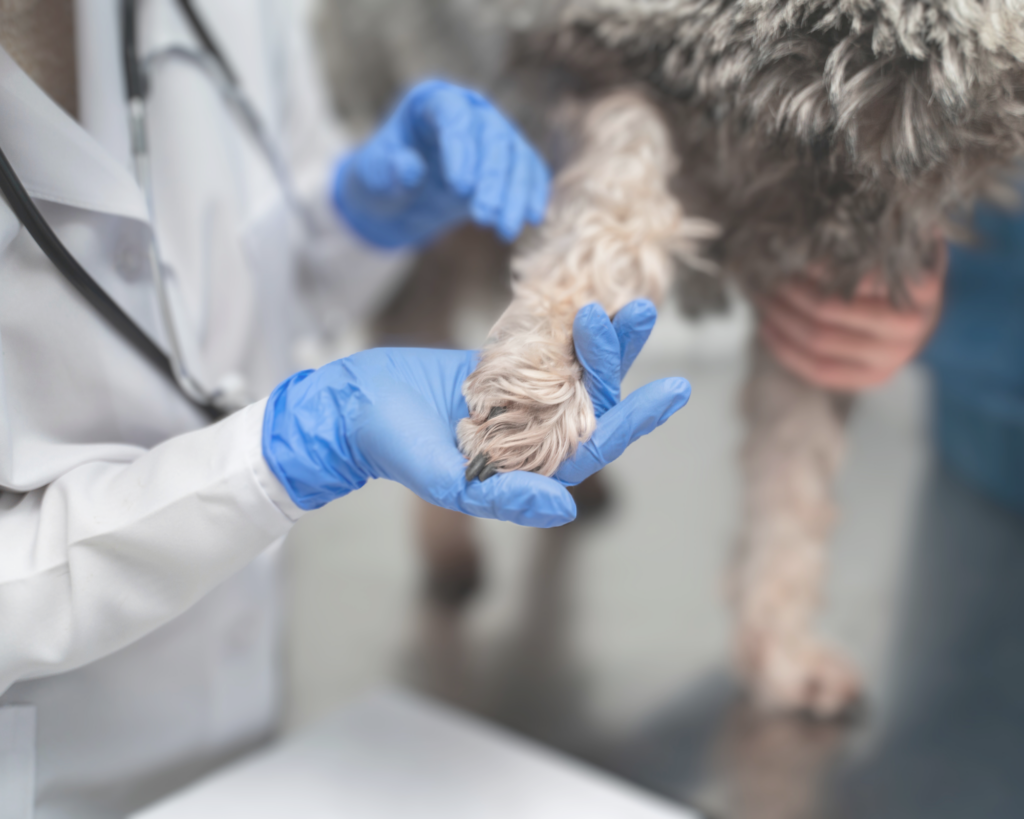
Fast and accurate diagnostics are essential in veterinary care. Quantitative rapid tests enable on-site detection of diseases while providing measurable data on biomarker levels or pathogen load.
This supports early intervention, improved prognosis, and optimized treatment decisions, as well as better herd management through detection of subclinical infections.
Detection technologies used: Fluorescence measurement, Luminescence measurement

Rapid detection of infectious diseases is vital for controlling outbreaks and enabling timely treatment. Quantitative lateral flow tests allow accurate diagnosis of pathogens directly at the point of need.
By measuring pathogen load, these tests support informed clinical decisions, early intervention, and targeted containment strategies.
Detection technologies used: Fluorescence measurement, Luminescence measurement

Maintaining the correct drug concentration is essential for effective therapy. Quantitative testing enables real-time monitoring of drug levels at the point of care.
This supports personalized dosing, improves treatment outcomes, and reduces the risk of adverse effects.
Detection technologies used: Fluorescence measurement, Luminescence measurement
Rapid Testing of Antibiotics in Milk

Ensuring milk safety requires detecting antibiotic residues quickly and reliably. Quantitative rapid tests provide detailed insight into concentration levels, supporting compliance with regulatory limits.
This improves traceability, reduces waste, and enables faster decision-making in high-throughput dairy environments.
Detection technologies used: Fluorescence measurement, Near-infrared spectroscopy
Rapid Mycotoxin Testing in Crops

Mycotoxins pose a significant threat to food safety and crop quality. Quantitative rapid tests enable early detection directly at storage sites or during harvest.
This ensures compliance with regulatory limits, reduces contamination risks, and supports efficient crop management.
Detection technologies used: Near-infrared spectroscopy, Fluorescence measurement
PSA Testing in Forensics
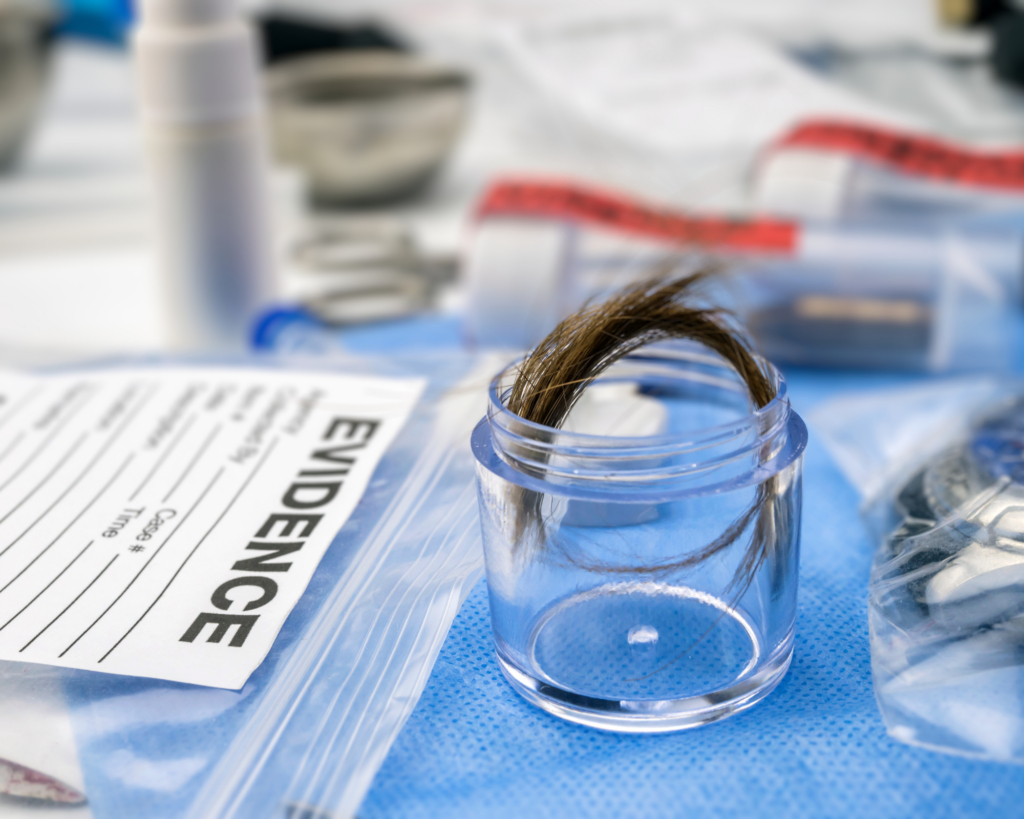
Rapid PSA testing enables fast identification of biological traces in forensic investigations, supporting efficient evidence collection and analysis.
Quantitative results provide additional insight into sample relevance and quality, improving documentation and workflow efficiency.
Detection technologies used: Luminescence measurement
Drug Testing for Abuse Detection

Rapid drug testing enables detection of substances directly at the point of collection. Quantitative analysis provides insight into concentration levels and potential impairment.
This supports decision-making in law enforcement, workplace safety, and clinical environments.
Detection technologies used: Fluorescence measurement, Luminescence measurement
Find the right detection technology for your application
Selecting the optimal detection technology depends on your specific application, required sensitivity, and measurement conditions. Our team supports you in identifying and integrating the most suitable solution for your analytical needs.